The Reality of Recruitment in 2026: What Leaders Are Doing Differently
Andy Dunne • February 4, 2026

Recruitment in 2026 doesn’t look like last year and that’s becoming impossible to ignore.


This isn’t a trend report or a set of predictions. It’s a reflection of what recruitment leaders are seeing right now, through real conversations with clients, candidates, and teams. 
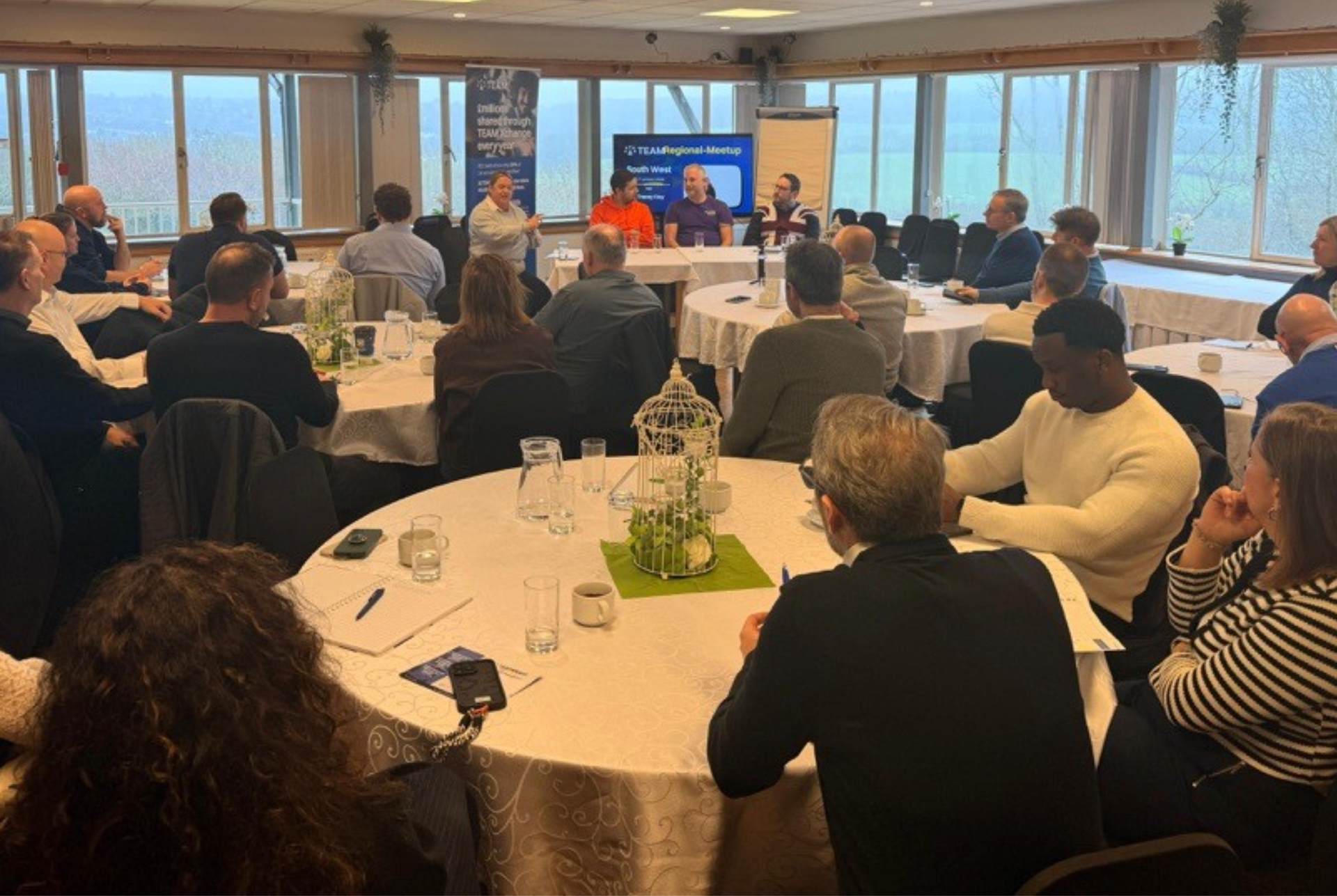
Southwest

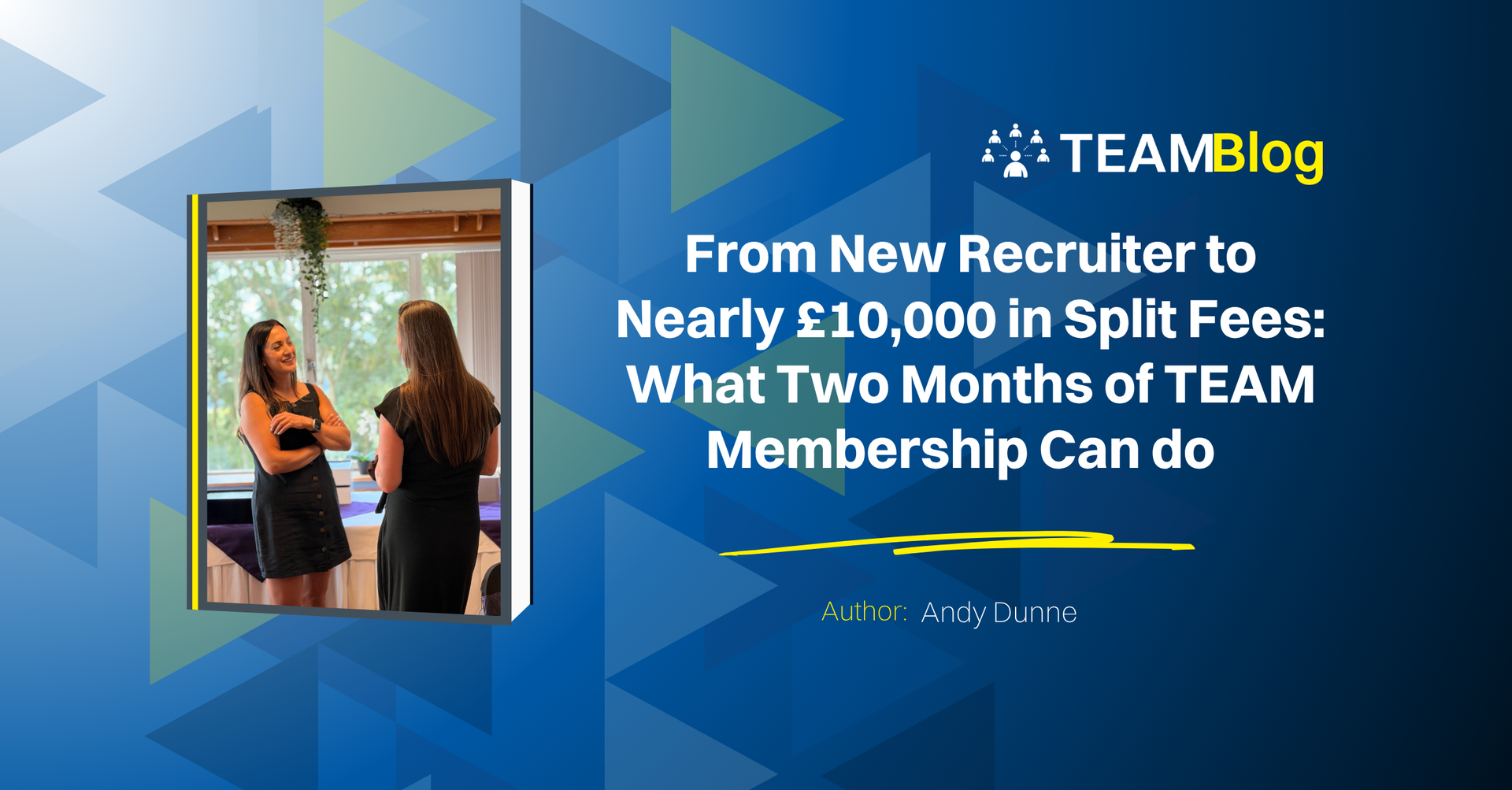
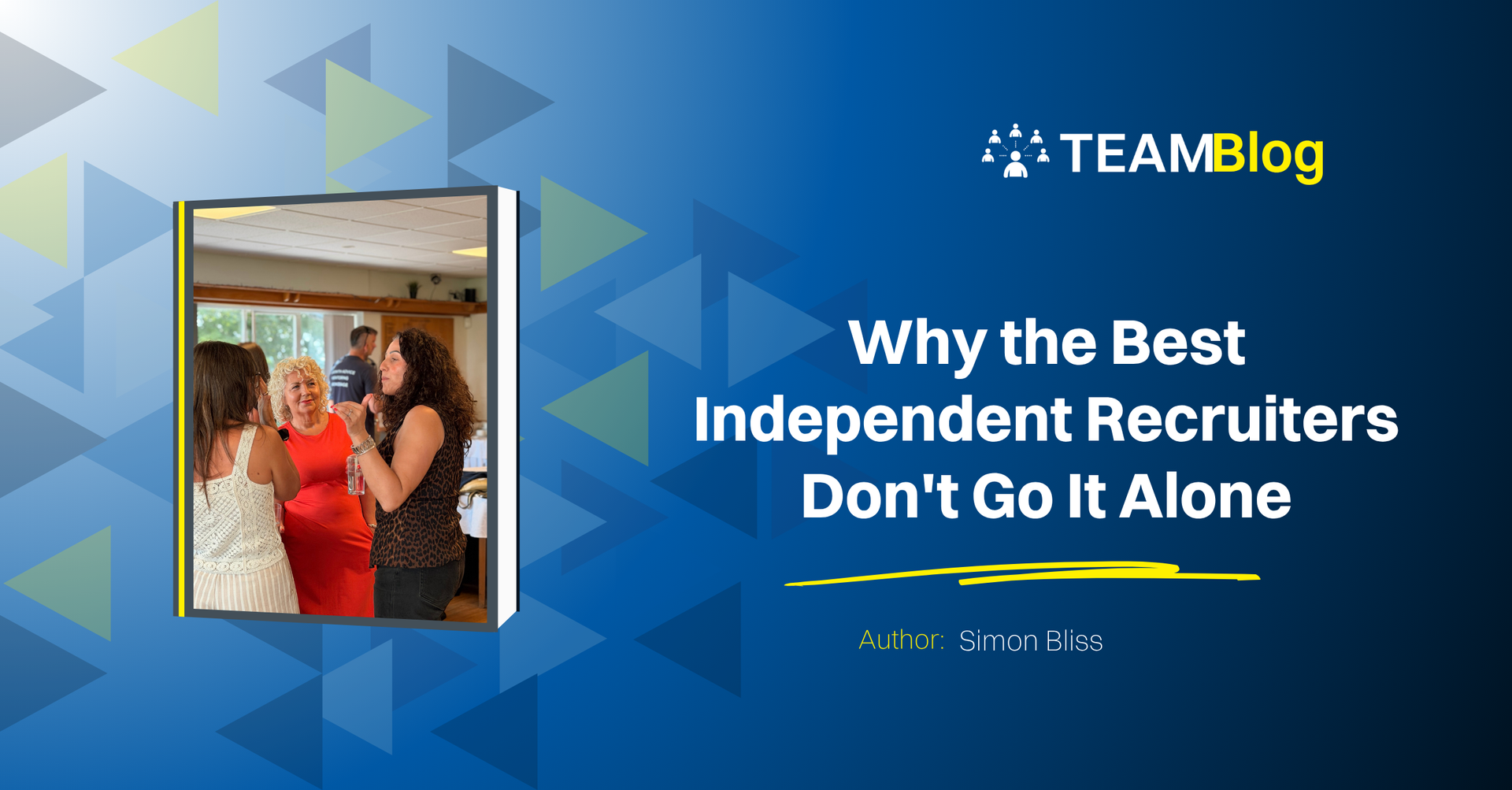
In January 2026, recruitment business owners, solo recruiters, and partners gathered for a South West & Wales panel discussion. The conversation was honest, practical, and at times uncomfortable. 

That discomfort mattered. Because it surfaced what’s actually changing and what’s quietly holding agencies back. 


Chapter 1: The Recruitment Market — Something Has Shifted 

There was clear agreement in the room: 

January 2026 does not feel like 2025. 

There is more movement in the recruitment market. More intent. More cautious optimism.
But that momentum is not universal. 

The agencies seeing traction aren’t waiting for the market to “return to normal.” They’ve accepted that normal has changed and they’ve adapted accordingly. 

They have: 

  • Changed how they go to market 
  • Pivoted parts of their offering 
  • Let go of approaches that no longer work 

One message landed particularly hard: 

Do not try to make 2026 look like 2025. 

Some agencies are still operating out of habit - running the same processes, selling the same way, and hoping patience will be rewarded. Others are making intentional changes, even when it feels uncomfortable. 


Leader reflection: 
What are we still doing purely out of habit?
What would we stop if we started this business today? 

That question alone sparked some of the most honest discussion of the session. 


Chapter 2: AI and Automation in Recruitment — Helpful or Harmful? 

AI is no longer optional in recruitment but misuse is everywhere. 

The panel was unanimous: 

  • More tools do not equal better results 
  • Shiny technology without strategy creates noise 
  • Automation without authenticity erodes trust 

The agencies using AI effectively aren’t trying to replace human interaction. Instead, they are: 

  • Using fewer tools, not more 
  • Designing clear, intentional workflows 
  • Protecting their voice, tone, and relationships 

Technology should support conversations, not replace them. 

Several leaders shared frustrations about bloated tech stacks and tools that looked impressive but delivered little real value. The issue wasn’t AI — it was lack of ownership, governance, and clarity. 


Leader reflection: 
Which tools genuinely save time?
Which ones just add complexity? 

For many, this prompted an uncomfortable realisation about wasted time and money. 


Want the Full Recruitment Playbook for 2026? 

These first two chapters only scratch the surface. 

  • The cyber risks most agencies underestimate 
  • What agencies are actually doing differently to protect margin and focus 
  • Why fundamentals still outperform convenience 
  • The fastest commercial win most agencies are missing 
  • What quietly holds recruitment businesses back — even when things look “fine” 
  • Why humans matter more than ever in a tech-enabled market 

If this blog made you pause or feel uneasy, that’s usually where the opportunity lies. 


👉 Download the full TEAMPlaybook  

Blog post graphic: people at a conference table, title
By TEAMNetwork January 14, 2026
In a year where many questioned the value of events, networks and face-to-face connection, the TEAMNetwork experienced something quietly remarkable.
Two people posing at the TEAMFirst event.  Title text overlays.
By Andy Dunne November 27, 2025
When I look back at my years as a solo engineering recruiter, there’s one thing I wish I’d had.
By Andy Dunne October 27, 2025
Last week Andy Dunne, TEAM’s MD, spent the day at LinkedIn’s Customer Experience Centre in London for Accelerate London.
solo recruitment event
By Andy Dunne September 23, 2025
On 18 September, 68 independent recruiters filled Marsh Commercial HQ in London for the largest TEAM Solo Division event to date.
By TEAM Network September 4, 2025
Outsourcing or Using Agency Workers? Here’s Why Mach Recruitment Ltd v Oliveira Matters
By Marsh Commercial August 6, 2025
In the recruitment industry, trust and confidentiality are the cornerstones of your daily operations. Handling sensitive data - such as CVs, ID documents and banking details - requires vigilance. Unfortunately, cybercriminals are increasingly targeting recruitment agencies, exploiting human vulnerabilities through social engineering tactics. 
By JMW Solicitors LLP July 3, 2025
As of this week, the Employment Rights Bill has completed the committee stage in the House of Lords. It is due for report stage from 14 July 2025, which is technically the last chance to make amendments. 
By JMW Solicitors May 29, 2025
The Supreme Court handed down its ruling in the case of For Women Scotland v The Scottish Ministers on 16 April 2025. They have ruled that when it comes to the provisions of the Equality Act 2010 (“EA 2010”), “sex” means “biological sex”. This does not include transgender people, even if they have a Gender Recognition Certificate (“GRC”). There has been widespread public debate surrounding the decision since it was handed down. In this article, we will attempt to clarify the implications of the decision. Background to the case The legal issue emerged following a Scottish government initiative in 2018 which aimed to improve female representation on public boards. At the time the initiative was launched, transgender women with a GRC were considered, for the purpose of the Gender Representation on Public Boards (Scotland) Act 2018 (“ ASP 2018 ”), to fall within the definition of a “woman”. According to the accompanying statutory guidance, this therefore brought transgender women with a GRC within the definition of a ‘woman’ under the EA 2010. In 2020, For Women Scotland Ltd, an organisation that campaigns to strengthen women’s rights in Scotland, challenged the government guidance. This resulted in new statutory guidance being issued, highlighting that section 212 of the EA 2010 defines a “woman” as “a female of any age”, and stating that a trans-feminine person with a GRC is a woman for the purpose of gender representation on public boards. For Women Scotland Ltd challenged the new statutory guidance in 2022, advancing the argument that the definition of a “woman” under the EA 2010 refers to biological sex, and therefore a trans woman with a GRC should not be included. This was the issue to be determined by the Supreme Court. The Supreme Court decision The Supreme Court unanimously allowed the appeal by For Women Scotland Ltd and held that within the EA 2010, the terms “man”, “woman” and “sex” refer to biological sex. The Supreme Court concluded this interpretation was necessary for clarity and coherency for provisions on maternity and pregnancy as well as other sex-based protections. The Court emphasised the importance of the Act being consistent and confirmed it would not be appropriate to include different definitions of “sex” for different parts of the Act. The Supreme Court stated that this decision does not reduce the separate protection against discrimination which is afforded to transgender people under the protected characteristic of gender reassignment. EHRC guidance The Equality and Human Rights Commission has issued interim guidance on the main consequences of the judgment, which can be found here . This guidance reiterates that it is compulsory for employers to provide sufficient single-sex toilets in the workplace and, where required, single-sex washing and changing facilities. Furthermore, trans women should not be permitted to use the women’s facilities and trans men should not be permitted to use men’s facilities. The guidance identifies that in some circumstances, the law allows trans women (biological men) not to be permitted to use the men’s facilities, and trans men (biological woman) not to be permitted to use the women’s facilities. Where there are facilities available to both men and women, however, trans people should not be put in a position where there are no facilities for them to use. The EHRC has confirmed that it intends to provide an updated Code of Practice to the UK Government which will help employers and other bodies to understand their duties under the Equality Act and put these into practice. Implications for the workplace The recent judgment will require employers to review their policies when it comes to toilets, changing rooms and washing areas. Following the Supreme Court decision, the starting point is that transgender people should use the bathroom correlating to their biological sex. However, there are legal risks in this approach, as transgender people are protected against discrimination by the characteristic of gender reassignment. A person with gender dysphoria may also have the protected characteristic of a disability. If a workplace bathroom policy is seen to be discriminatory on the basis of gender reassignment or gender dysphoria, then the company could be at risk of tribunal proceedings on this basis. Employers should identify which facilities a transgender person may use while also retaining some single-sex facilities. As an alternative, the 1992 regulations provide that employers may provide facilities in a room with a lock capable of being secured from the inside, to be used by one person at a time. These can be used by anyone. Employers may consider choosing to update their facilities to unisex options which are compliant with these standards. Fundamentally, this is an issue of competing rights. Companies will need to assess which rights are engaged in each individual case and consider how any policy could impact potential discrimination claims on the basis of: Sex, Gender reassignment, Religion and belief, and Disability. Article by JMW Solicitors LLP
By TEAM Network May 7, 2025
The global economy is facing serious disruption and there are few signs that this uncertainty will ease any time soon. 
By Marsh Commercial May 6, 2025
Starting a Recruitment Business? Here’s what you need to know about Business Insurance