Embracing Technology to Support DE&I Initiatives
TEAM Hub Support • August 9, 2020

There is a growing body of research and evidence supporting the business case that organisations embracing a culture of Diversity, Equity and Inclusion (DE&I) thrive while those that do not are consistently disadvantaged.


A long-term study by McKinsey & Company indicates the business case for DE&I is stronger than ever. For diverse companies, the likelihood of outperforming industry peers has increased over time with the penalties getting steeper for non-diverse. Their study shows that companies in the top quartile for executive team gender diversity were 25% more likely to experience above average financial performance than their peers. A more positive outcome is expected with respect to ethnic diversity, with those companies in the top quartile for executive team ethnic diversity 36% more likely to experience above average financial performance than their peers in the fourth quartile.


Workplace equity and inclusion, therefore, is not only the moral thing to do, it provides a strategic and financial advantage. The good news is that recent advances in technology provide new ways to assist organisations in their efforts to make their workplace a more diverse and inclusive one.

๏ปฟ

According to data from research firm, RedThread, DE&I technology has experienced a rapid increase in investment. It is estimated the overall market size for DE&I technology in 2020 was USD 313/GBP 244 million following two years of compound annual growth of 59%. The number of vendors offering these services has also increased 87% since 2019. These DE&I technology providers could assist in building best practices, changing behaviours, gaining insights and making recommendations that address bias.


For staffing firms, embracing such technology might be useful for their own internal DE&I initiatives but, importantly, can also be harnessed to support their client’s efforts as well. SIA’s own research shows that, beyond the flaws in permanent hiring, DE&I is often overlooked completely when hiring contingent labour (temporaries, contractors and freelancers). And just as McKinsey found, SIA’s analysis showed that those firms that were proactive in applying DE&I to their contingent hiring experienced superior outcomes across all examined factors. 

New technology can play a vital role in eliminating the barriers to success through the provision of diversity data. Lack of data seems to be an initial stumbling block for many organisations meaning that it is impossible for their strategies to be monitored effectively. An increasing number of solution providers offer DE&I analytics such as Humanyze, Affirmity and BiasSync to name just a few. Benchmarking data is readily available, with Gapsquare providing people analytics software that streamlines pay analysis and highlights pay disparities, offering a free tool to calculate mean and median gender pay figures and highlight the proportion of male and female employees by quartile pay bands.

Used appropriately, technology can also play an important role in candidate discovery. This includes online job advertising providers such as job boards that focus on minority groups. For example:

๏ปฟ

  • Evenbreak helps inclusive employers attract and retain disabled candidates
  • Work180, a job board for female jobseekers provides an opportunity for employers to clearly demonstrate their commitment to supporting women in the workplace. Jobseekers can compare employers’ benefits and assess which are the most suited to their needs based on equal pay, flexibility, parental support and diversity
  • The Diversity Dashboard an online diversity jobs board that works as a conduit between employers and talent
  • The Mom Project helps women remain active in the workforce and boasts Serena Williams as a strategic advisor. An estimated 43% of highly skilled women leave the workforce after becoming mothers.


Another area where technology can be used for better equity and inclusion is in relation to candidate engagement. Interacting with candidates by phone, text message, video call, email or in person needs to be conducted in a way that eliminates bias. Recent technological advancements such as the use of artificial intelligence have led to better outcomes regarding culture, employee engagement and inclusivity. For example, Mya offers an AI recruiting assistant with conversational artificial intelligence (CAI) which provides insights and a true understanding of candidate profiles in an unbiased manner.


Throughout the entire candidate experience commencing with analytics and benchmarking, to candidate discovery via sourcing automation tools, candidate assessment and verification there exists a multitude of technology providers ready and willing to impart their knowledge and technology offerings in order to assist organisations in their DE&I goals. Given the important intermediary role that staffing firms play between employers and jobseekers, understanding and successfully deploying such technology is a growing area of competence and competitive differentiation.


SERVICE PROVIDER SPOTLIGHT


This article has been provided by TEAM Service Provider – Staffing Industry Analysts


Founded in 1989, Staffing Industry Analysts (SIA) is the global advisor on staffing and workforce solutions. Our proprietary research covers all categories of employed and non-employed work including temporary staffing, independent contracting and other types of contingent labour. SIA’s independent and objective analysis provides insights into the services and suppliers operating in the workforce solutions ecosystem, including staffing firms, managed service providers, recruitment process outsourcers, payrolling/compliance firms and talent acquisition technology specialists, such as vendor management systems, online staffing platforms, crowdsourcing and online work services. They also provide training and accreditation with their unique Certified Contingent Workforce Professional (CCWP) programme.

By Simon Bliss August 25, 2026
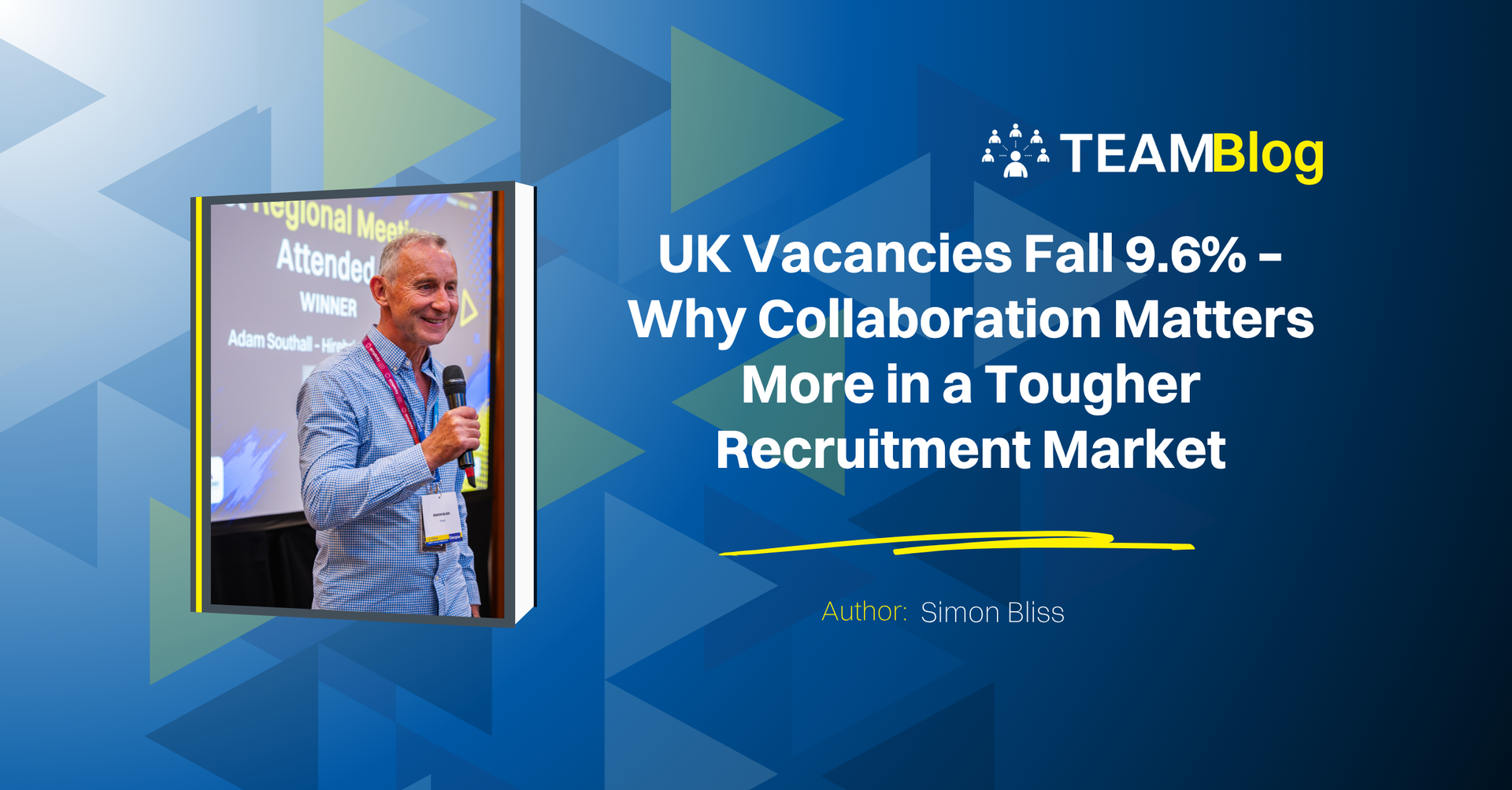
The latest UK employment data makes uncomfortable reading for the recruitment sector, but it also reinforces why independent recruitment businesses need to work differently in today's market. According to the latest Adzuna UK Job Market Report, reported by Staffing Industry Analysts, the number of UK vacancies stood at 791,490 in July 2026, down 9.6% year-on-year. This represents a reversal of some of the gradual improvement seen earlier in the year and confirms what many recruiters are already experiencing: there are fewer vacancies to compete for and clients remain cautious about hiring. However, the headline figure doesn't tell the whole story, there are still areas of growth Several important sectors continue to expand: Teaching vacancies increased 11.9% year-on-year Trade & Construction increased 8.3% Manufacturing increased 2.2% Travel vacancies increased 348% Meanwhile, average advertised salaries remain 3.01% higher than a year ago at £43,675. IT continues to command the highest average salaries at £67,771, up 16.8% annually, while salary growth was also strong in Sales (+11.3%), HR & Recruitment (+9.8%) and Consultancy (+9.5%). So while overall hiring demand has reduced, there are still sectors, skills and individual employers where significant recruitment opportunities exist. A smaller market makes every opportunity more valuable for independent recruitment businesses, perhaps the most important lesson isn't simply that there are fewer jobs. It's that every job, candidate and client relationship has become more valuable. When vacancies were plentiful, recruiters could afford to walk away from a role outside their specialism, geography or candidate network. In today's market, that is potentially lost revenue. Similarly, recruiters may already have excellent candidates sitting within their databases for whom they don't currently have a suitable vacancy, that creates a strong argument for collaboration. The TEAM Advantage: TEAM was built around the principle that independent recruitment businesses can achieve more by working together while retaining their independence. Through TEAM Xchange, members can share vacancies and candidates with other trusted recruitment businesses. If one member has the vacancy and another has the right candidate, they can make the placement together and share the fee. Last year, TEAM members shared £10.4 million in recruitment fees through TEAM Xchange. In a market where vacancies are down 9.6%, the ability to access opportunities beyond your own individual client base becomes increasingly important. Instead of saying: "We can't fill that." or: "We don't recruit in that sector." a TEAM member has the opportunity to ask: "Could another TEAM member help us make this placement?" Likewise, a strong candidate who cannot currently be placed with your own clients may be exactly what another TEAM member needs. Smaller recruiters can remain agile, t here is another reason for optimism. Challenging markets often reward businesses that can move quickly. Independent recruiters typically have fewer layers of management, closer client relationships and the ability to specialise deeply in particular markets. Combine that agility with access to a wider recruitment community and suddenly a small recruitment business can have considerably greater reach than its headcount might suggest. TEAM members can draw upon fellow specialists across multiple sectors, regions and disciplines rather than trying to build every capability internally. That means remaining independent without having to operate alone. Focus on what you can control and n obody can control the overall number of UK vacancies. Recruitment business owners can, however, control how effectively they exploit the opportunities that remain. That means: Specialising – Know where your expertise genuinely adds value. Collaborating – Don't automatically turn away vacancies or candidates you can't service yourself. Working your candidate database – Great candidates already known to you are valuable assets. Expanding client conversations – Understand where clients are still hiring and where skills remain difficult to find. Using your network – Access knowledge, candidates, jobs and expertise beyond your own business. Protecting margins – In a more competitive market, quality and specialist expertise matter more than competing purely on price. Tough market. Different opportunity. The July figures show that UK recruitment remains challenging. Graduate recruitment is particularly difficult, with vacancies falling 45.6% year-on-year to a record low of 8,383, while several major sectors continue to experience significant reductions in hiring. But there are still almost 800,000 advertised vacancies across the UK, salaries continue to rise annually and several sectors are growing. For independent recruiters, the objective isn't to wait for the market to return to the conditions of a few years ago, it's to adapt to the market we have today. At TEAM, we believe collaboration is one of the ways independent recruiters can do exactly that: sharing opportunities, accessing specialist expertise and helping each other make placements that might otherwise have been lost. In a market with fewer jobs, making more of every opportunity matters more than ever.
By Andy Dunne August 21, 2026
TEAM Membership over 2 months: Four permanent invoices, one temp placement and nearly £10,000 in split fees.
By Andy Dunne August 14, 2026
I’ve finally broken the 2 million LinkedIn impressions marker in 365 days.
By Andy Dunne August 5, 2026
Why TEAM chose WTT, and why I believe it's one of the biggest enhancements to Membership we've ever made
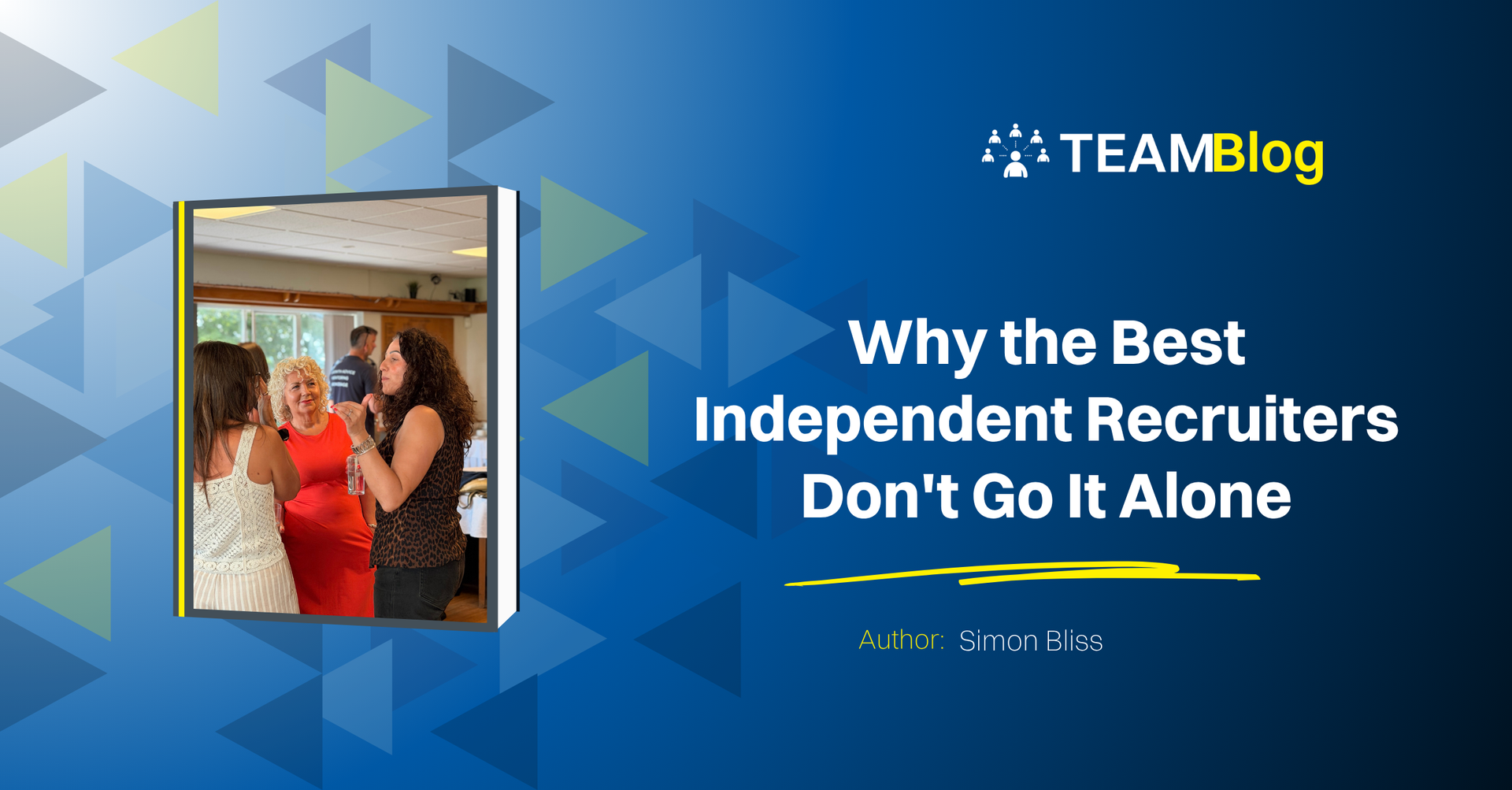
TEAMBlog webinar banner with blue geometric background and title, โ€œWhy the Best Independent Recruiters Donโ€™t Go It Alone.โ€
By Simon Bliss July 30, 2026
Collaboration isn't giving something away, it's creating opportunities you could never win on your own.
By Partners& June 9, 2026
At a time when recruitment businesses are faced with myriad challenges, the fact that Partners& has joined the TEAM Network is welcome news. Partners& is an award winning insurance advisory business committed to collaborating with clients to help them protect their business and build lasting resilience.
By Simon Bliss June 9, 2026
In Clifton Diocese (“the Diocese”) v Parker [2026], the Employment Appeal Tribunal (“EAT”) considered whether the burden of proof test was being misapplied in respect of a religion or belief discrimination case and confirmed the legal approach to be taken. This case also highlighted deficiencies with the employer’s process, escalation of initial performance concerns and the sanction applied. Read on for further details of why this case is important, especially for employers dealing with performance issues and conducting formal processes.
By Simon Bliss April 30, 2026
On 7 April 2026, the Fair Work Agency (“FWA”) was established as an executive agency of the Department for Business and Trade. Its creation marks a significant shift in how worker protections are enforced, by bringing together multiple enforcement functions which were previously exercised by multiple bodies.
By Simon Bliss April 9, 2026
In Dobson v North Cumbria Integrated Care NHS Foundation Trust (the “Trust”), the Employment Tribunal considered whether the Trust’s policy of requiring all community nurses to be available to work flexibly, including at weekends, amounted to indirect sex discrimination.
New Acas Survey on the Employment Rights Act 2025
March 3, 2026
New Acas Survey on the Employment Rights Act 2025